


Min.Order : 1 Pieces Quick Quotation >
Conpany Profile
Product Details
Railway bearings:
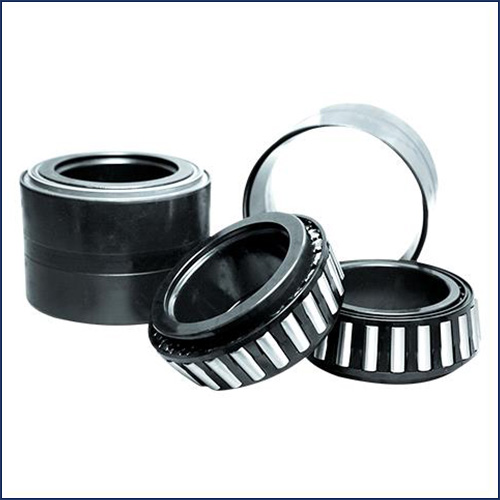
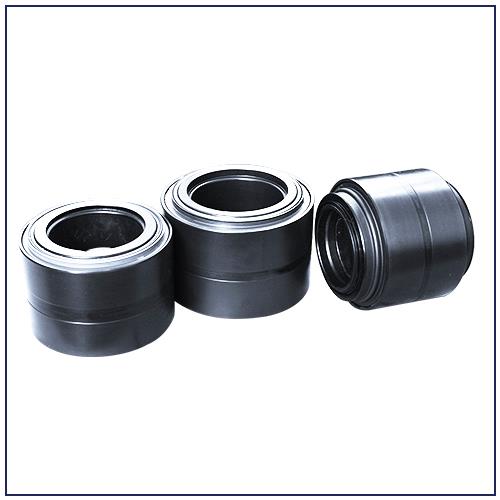
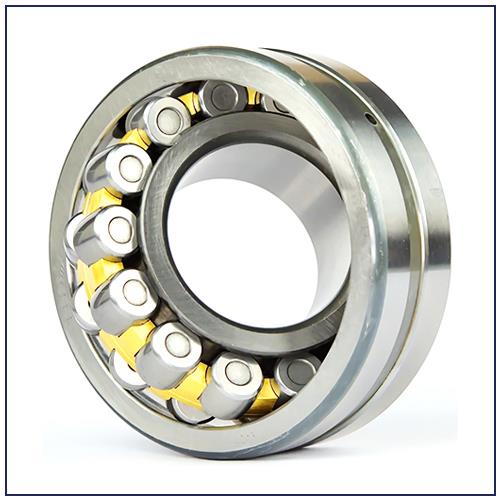
Railway Locomotive & Roller Bearings are bearings used in locomotives and vehicles. Including power plant bearings, axle box bearings, motor bearings, transmission bearings, cooling system bearings etc….
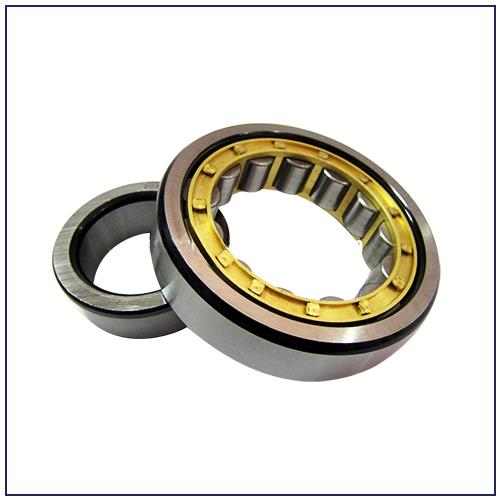
The normally used railway bearings are cylindrical roller bearings and tapered roller bearings. Most of the axial loads of railway diesel locomotives and electric locomotives adopt cylindrical roller bearings, mostly common are four-row cylindrical roller bearings and two-row cylindrical roller bearings.
Railway bearings are mainly used for railway trucks, subways, light rail transit, streetcar (tram) etc…. it is able to bear the carriage and the inertial force of whole weight, provide high stability to rail transit vehicles.
1. Railway bearing cold treatment process
1) After quenching at room temperature to stay:
After quenching the inner and outer rings need to be cooled to room temperature after special treatment. Otherwise it is easier to crack, put cold in room temperature immediately after treatment (usually not more than 30 minutes) otherwise it will stop the austenite to martensite transformation.
2) Cold treatment temperature: cold treatment temperature is mainly based on martensite steel termination temperature, in addition to consider the impact of cold treatment on mechanical properties and process factors.
3) Cold treatment Insulation: Although a large number of martensite transformation is cold to a certain temperature when the instantaneous completion, but in order to make a number of ferrules on the surface and the heart are even reached the cold treatment temperature, the need for a certain holding time, usually in one an hour and a half.
4) LBR railway bearing tempering after cold treatment: ferrule on the air after cold treatment, the temperature slowly rose to room temperature and tempered. The temperature can’t be too fast, otherwise easy to crack, tempering time, or larger internal residual stress ring will lead to cracking ring, usually no more than two hours.
Quality inspection of cold treatment usually, the main defect of the bearing ring after cold treatment is the crack, which can be inspected by magnetic inspection method.
2. Railway bearing lubrication
Mainly grease and oil lubrication. Grease lubrication is not easy to leak, easy to seal, use a long time, easy maintenance and high film strength, but the friction torque than oil lubrication, should not be used for high speed.
Railway bearing grease filling amount should not exceed 1/2 ~ 1/3 of the railway bearing space, otherwise it will overheat the railway bearing due to too much stirring lubricant. Oil lubrication cooling effect, but the sealing and fuel supply device is more complicated. The viscosity of the oil is generally 0.12 ~ 0.2 cm / sec. large load, high temperature should use high viscosity oil, high viscosity low viscosity oil selection.
Lubrication methods are oil bath lubrication, drip lubrication, oil mist lubrication, fuel injection lubrication and pressure lubrication. Oil bath lubrication, the oil surface should not be higher than the bottom of the rolling center. According to the theory of elastic hydrodynamic lubrication design of the bearing and select the viscosity of the lubricant, the contact surface will be separated by the oil film. At this time, the railway bearing life can be increased many times under the action of steady load.
Modern machinery, equipment and other equipment are high-speed, heavy load, precision, light and so on, which made many new requirements for the railway bearings, such as reducing the size of the railway bearings while maintaining or even increasing the rated load, the use of new technologies to improve the process, improve manufacturing accuracy and reduce costs.
Universal railway bearings have been very difficult to meet a wide range of requirements, the production of large machinery and equipment should be designed and manufactured special railway bearings, while strengthening the standardization, increase variety, expand the proportion of special railway bearings. The development of modern industry also requires special railway bearings that work under special conditions, such as railway bearings operating in high speed, high temperature, low temperature, high magnetic field or in medium such as acids and bases.
3. Railway bearing common fault
The phenomenon of railway bearing failure is generally manifested in two ways, one is railway bearing mounting parts temperature is too high, the second is noise in the operation of the railway bearing.
1) Railway bearing temperature is too high
In the operation of the body, the installation of railway bearing parts allow a certain temperature, when touching the body shell by hand, should not feel hot as normal, otherwise the railway bearing temperature is too high.
Bearing temperature is too high because: the quality of lubricants do not meet the requirements or deterioration of the oil viscosity is too high; body assembly too tight (lack of space); railway bearing assembly tight; railway bearing race on the shaft or shell rotation; Large; bearing cage or rolling fragmentation.
2) Railway bearing noise
Railway bearings in the work allow a slight operating noise, if the noise is too loud or there is abnormal noise or percussion sound, it indicates that the railway bearing failure.
The reasons for the noise generated by railway bearings are more complicated. The first is that the inner and outer rings of the bearing wear with the surface. Because of this wear and tear, undermine the railway bearing and housing, railway bearings and shaft with the relationship between the axis of deviation from the correct position, the shaft at high speed when the abnormal sound.
When the railway bearing fatigue, the surface of the metal spelling, but also make the railway bearing radial clearance increases abnormal sound. In addition, insufficient railway bearing lubrication, the formation of dry friction, and railway bearing crushing, etc. will produce abnormal sound. Songkuang railway bearing wear, the cage loose damaged, will produce abnormal sound.
3) Railway bearing wear
Railway bearing wear is a common equipment problem in the process of using the shaft, which is mainly caused by the metal characteristics of the shaft: although the hardness of the metal is high, the metal has poor concession (irreversible after deformation), poor impact resistance and poor fatigue resistance, Adhesive wear, abrasive wear, fatigue wear, fretting wear and the like. Most of the shaft wear is not easy to detect, only in the presence of high temperature, large amplitude, abnormal sound, etc., will be aware of, but to the people found that most of the rolling shaft has been worn, resulting in machine downtime.
4. Railway bearing disassembly
Railway bearings should be cleaned before installation. When installing, you should use special tools to press the auxiliary railway bearing straight evenly, do not use hand hammer percussion, in particular, directly on the railway bearing percussion. When the railway bearing race and seat hole with loose, you should repair the seat hole or replace the railway bearing, do not use the railway bearing mating surface pitting or pad copper skin barely used.
Railway bearings should be removed when using a suitable pull the railway bearings out, do not use chisels, hand hammer and other percussion railway bearings.
Large axle heavy railway truck bearing components
Railway trucks without axle box bearings
Railway bus car bearings
High-power motorcycle axle box bearings
Traction motor
Main generator bearing
Metro light rail transit bearing
Light rail bearing
Subway bearing
High-speed railway bearing
Railway bearing friction coefficient is lower, less friction, compact structure.
NU2217 NU2218
NU2219 NU2304EM
NU2220 NU2222 NU2224
NU2305EM NU2226
NU2228 NU2230 NU2306EM
NU2232 NU2234
NU2236 NU2307EM
NU2238 NU2240
Recommend Product

Privacy Policy -Terms of Use
Greater stability and upgraded communication tools


 Home
Home
 Inquiries
 RFQ
RFQ
 Your Request
 My Favorites
 Order
Order